
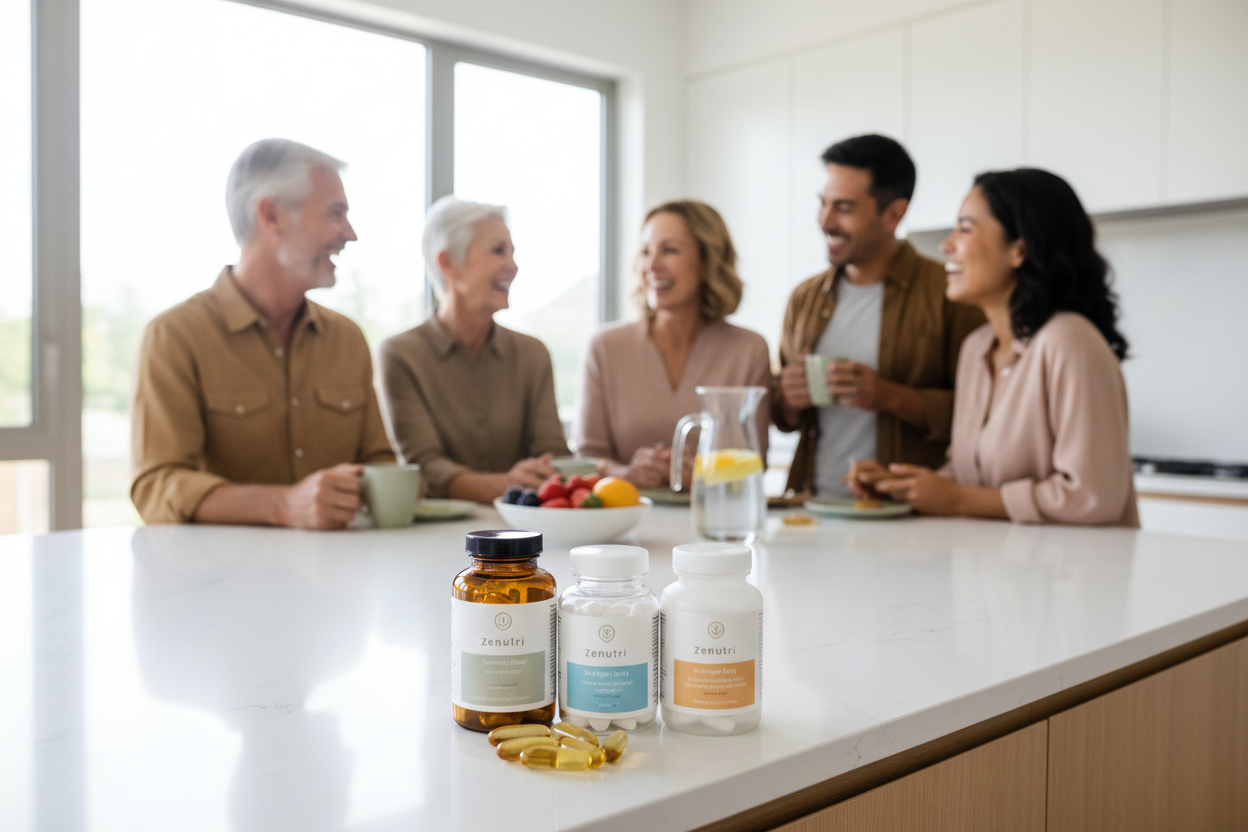
Research estimates that by 2030, the global market for healthy-ageing supplements will exceed USD $77 billion — and Australians are leading the charge, with over 60 percent of adults aged 45 and above now incorporating some form of longevity supplements into their daily routine. Yet despite this surge in interest, many people are still piecing together isolated nutrients without a coherent strategy, essentially taking supplements without a clear nutritional rationale. It's a costly and often ineffective approach.
The good news is that longevity nutrition has moved well beyond the guesswork phase. Research now indicates that sustained vitality is not the result of a single molecule but rather the coordinated nutritional support of four interconnected biological systems operating at the cellular level. When you support these systems simultaneously, the cumulative effect on your energy, resilience, and long-term general health may be greater than any single supplement can achieve alone. This article will walk you through the published evidence behind each pathway, and how to build a daily routine that addresses all four.
Key Takeaways
- Understand why healthy ageing is supported by four interconnected cellular nutritional pathways rather than any single nutrient, and how supporting them simultaneously may amplify results.
- Learn the published evidence behind NAD+ precursor availability, why levels change with age, and how nicotinamide riboside (NR) supports this important coenzyme.
- Discover how CoQ10 supports mitochondrial ATP production, and why published research points to a specific dose for meaningful benefit.
- Understand how botanical compounds like curcumin and resveratrol support antioxidant defence and general wellbeing — and why bioavailability is the deciding factor in whether they work at all.
- Discover the D3 and K2 partnership that supports bone mineralisation, and why published research supports taking both together for bone and general health maintenance.
Why Healthy Ageing Begins at the Cellular Level
Before your body can run a meeting, complete a workout, or sleep through the night, it must first generate power at the microscopic level. Every biological function you experience — from the clarity of a sharp morning thought to the steady rhythm of your heartbeat — depends on the continuous production of ATP (adenosine triphosphate), the primary energy currency of every cell. This process occurs in your mitochondria, and its efficiency influences how vital or depleted you feel on any given day.
The challenge with ageing is that these cellular systems don't change dramatically or all at once — they shift gradually. NAD+ precursor availability, which drives cellular energy reactions, changes with age as documented in published research. CoQ10, the molecule that supports electron transport in your mitochondria to generate ATP, also changes with age and is further influenced by commonly prescribed statin medications. Meanwhile, the accumulation of oxidative by-products from energy metabolism may begin to outpace the body's natural antioxidant defences, and bone turnover quietly shifts over time.
These are not isolated issues — they are four connected dimensions of cellular nutrition. The most effective longevity supplements don't address one dimension in isolation; they support the entire system. To understand where to begin, take our personalised health quiz and identify the specific pathways your body needs to prioritise right now.
The Four Pathways That Support Healthy Ageing
Research has converged on four biological systems as primary nutritional targets for long-term cellular health. These are NAD+ precursor availability and cellular energy metabolism, mitochondrial ATP production, antioxidant activity and general cellular health, and bone mineralisation with healthy calcium metabolism. Each pathway is distinct, but each may benefit from the others functioning well. By supporting all four simultaneously, you create a nutritional foundation for sustained energy, cardiovascular general health, structural integrity, and metabolic support that extends beyond what any individual supplement can provide.
Why a Coordinated Protocol Outperforms Individual Nutrients
Many Australians approach supplementation by reaching for the most discussed ingredient of the moment — CoQ10 one month, a resveratrol capsule the next. While each of these compounds has published nutritional merit in isolation, research increasingly supports coordinated multi-pathway protocols as the preferred nutritional strategy for long-term general health. This is because these pathways are biochemically upstream and downstream of one another. NAD+ precursor availability supports the metabolic reactions that feed the mitochondrial electron transport chain. CoQ10 operates within that chain to generate ATP. The antioxidants curcumin and resveratrol support the mitochondrial membranes where this entire process unfolds. Addressing all four nutritional dimensions together creates more systemic support than addressing each in isolation.
Pathway One: NAD+ Precursor Availability and Cellular Energy
NAD+ (nicotinamide adenine dinucleotide) participates in a large number of enzymatic reactions in the human body, making it one of the most fundamental metabolic molecules we possess. It drives the redox reactions that support mitochondrial energy production and supports the general cellular repair processes that contribute to long-term health. Research by Yoshino 2011 in Cell Metabolism has documented age-related changes in NAD+ availability — and Brenner 2018 in Nature Communications examined blood NAD+ levels following nicotinamide riboside (NR) supplementation in healthy adults, observing meaningful changes at 60 days of consistent daily dosing. Ensuring your longevity supplements include a research-informed NR dose is one of the higher-leverage nutritional decisions for cellular health support.
Nicotinamide Riboside: The Precursor With Strong Research Support
Not all NAD+ precursors are equal. While niacin and nicotinamide have been used for decades, NR may offer a distinct metabolic advantage: it may bypass rate-limiting enzymatic steps that slow the conversion of older precursors, allowing for more direct and efficient uptake into the NAD+ biosynthesis pathway. It is also significantly better tolerated than niacin, which can cause facial flushing at doses required for NAD+ support. For those seeking sustained daily energy and general wellbeing support, NR combined with resveratrol — a polyphenolic antioxidant — forms a particularly well-studied combination for general cellular health. You can explore this combination in the Zenutri Daily Foundation Bundle, which includes both compounds in research-informed doses.
The Magnesium Factor in NAD+ Metabolism
One aspect of NAD+ support that is frequently overlooked is the role of magnesium. Many of the enzymatic reactions within the NAD+ pathway are magnesium-dependent, meaning that even a well-dosed NR supplement may underperform in the context of magnesium insufficiency — a state that affects a significant proportion of Australian adults based on dietary intake data from the NHMRC 2017 Nutrient Reference Values. Pairing NR with a highly bioavailable form of magnesium, such as the amino acid chelate used in Zenutri formulations, ensures the full enzymatic machinery is supported from the ground up.
Pathway Two: Mitochondrial ATP Production and CoQ10
CoQ10 (ubidecarenone) functions as an electron carrier within the mitochondrial electron transport chain — the final and most productive step of cellular respiration, where the majority of your ATP is generated. Without adequate CoQ10, this chain operates below capacity, ATP output falls, and the cells most dependent on continuous energy — cardiomyocytes, skeletal muscle fibres, and neurons — are among the first affected. Published research has examined CoQ10 in relation to cardiovascular general health, energy production, and antioxidant activity across a range of populations. The Fotino 2013 meta-analysis in the American Journal of Clinical Nutrition reviewed CoQ10 supplementation across published trials and identified dosing patterns associated with meaningful metabolic outcomes. These are the outcomes of a nutrient performing a fundamental biological function that changes predictably with age.
The Statin Connection Most People Don't Know
If you or someone you know is taking a statin medication, CoQ10 nutritional support becomes an important consideration. Statins work by inhibiting the HMG-CoA reductase enzyme — the same enzyme used in the body's endogenous synthesis of CoQ10. This means statin therapy, while effective at supporting cholesterol levels, simultaneously influences the availability of the molecule required for mitochondrial energy production. The fatigue and muscle aches that many statin users experience may be related to changes in CoQ10 availability. Including a research-informed dose of CoQ10 in your longevity supplements protocol is particularly important in this context — and should be discussed with your GP before initiating.
What Counts as a Research-Informed Dose
Published research is clear that not just any dose will do. Many products on Australian pharmacy shelves offer 30 to 50mg of CoQ10 — amounts that published literature consistently shows may be insufficient to produce measurable outcomes. The Fotino 2013 meta-analysis supports doses of 150mg or higher for meaningful metabolic and cardiovascular general health support. Zenutri's UbiQ Forte (AUST L 520795) contains 150mg of ubidecarenone per dose — a formulation aligned with this evidence base. Mandatory warning: Do not take while on warfarin therapy without medical advice.
Pathway Three: Botanical Antioxidants and General Wellbeing
Every time your mitochondria generate ATP, they also produce reactive oxygen species as metabolic by-products. This is an unavoidable consequence of energy production — and it becomes more pronounced as mitochondrial efficiency changes with age. Your body has endogenous antioxidant systems to manage this oxidative load, but these too change over time. This is where botanical compounds contribute not merely as antioxidants in the traditional sense, but as modulators of the cellular environment that supports your body's general health response to oxidative and inflammatory stress.
Two compounds have the most extensive research base in this area: curcumin from Curcuma longa and resveratrol from red grape skin. Both have TGA-permitted antioxidant and anti-inflammatory indications in Zenutri products. For those investing seriously in longevity supplements, the nutritional rationale for including both is well-supported — they address the antioxidant and general inflammatory support that becomes increasingly relevant with age and the accumulation of dietary and metabolic oxidative load.
Curcumin and the Bioavailability Problem
The challenge with curcumin that most supplement labels don't address: in its native form, curcumin has poor oral bioavailability. It is rapidly metabolised and excreted before it can exert meaningful effects at the cellular level. The 1998 pharmacokinetic study by Shoba and colleagues in Planta Medica demonstrated that combining curcumin with piperine — the active compound in black pepper — increases its bioavailability substantially. This is a peer-reviewed pharmacokinetic finding that should be considered non-negotiable when evaluating any curcumin-based formulation. Zenutri's CurcuNova (AUST L 520796) includes BioPerine-standardised piperine at 13.9mg precisely because the published evidence supports this co-formulation approach. Mandatory warnings: In very rare cases, Curcuma species may harm the liver — stop use and see a doctor if you have yellowing skin/eyes or unusual fatigue, nausea, appetite loss, abdominal pain, dark urine, or itching. Not suitable for children. Not recommended for pregnant or lactating women. Resveratrol may affect the way some medicines work, including Warfarin — consult your health professional before taking with other medicines.
Resveratrol's Role in the Longevity Network
Resveratrol has earned its reputation in longevity research through its antioxidant activity and its role as a polyphenol that supports general cellular health in response to oxidative load. Research suggests it may support mitochondrial function through mechanisms related to NAD+ availability — sitting at the intersection of Pathways One and Three and potentially amplifying the metabolic support that elevated NAD+ precursor availability makes possible. The combination of resveratrol with nicotinamide riboside is therefore a well-considered nutritional pairing, addressing both the upstream energy substrate layer and the antioxidant protection layer simultaneously. Any well-designed longevity protocol accounts for this complementary relationship.
Pathway Four: Bone Mineralisation and Calcium Metabolism
Longevity isn't only about the energy to keep going; it's about the structural integrity to stay upright while you do. Bone density changes are one of the most clinically significant but underappreciated aspects of healthy ageing. The Australian Institute of Health and Welfare reports that osteoporosis affects approximately one million Australians, with significant proportions experiencing osteoporotic fractures during their lifetime. These fractures carry serious consequences for independence, mobility, and quality of life in later years. The nutritional support for bone mineralisation is well-defined and the published evidence is compelling.
Vitamin D3 and Vitamin K2 are the two most critical nutrients in this equation, but their relationship is more nuanced than most people realise. D3 supports the intestinal absorption of calcium and signals the kidneys to retain it — but it does not, on its own, direct where that calcium goes once it enters circulation. Without adequate K2, absorbed calcium may not be effectively directed to bone matrix. K2 activates two calcium-regulating proteins — osteocalcin and matrix Gla protein — that together support calcium incorporation into bone while helping maintain healthy soft tissue. This is why Zenutri Osteo+Core (AUST L 520792) carries the TGA-permitted indication: "Vitamin D helps calcium absorption and a diet deficient in calcium can lead to osteoporosis in later life."
The Published Evidence for K2 at a Research-Informed Dose
The Knapen 2013 randomised controlled trial published in Osteoporosis International demonstrated that daily supplementation with 180mcg of MK-7 (menaquinone-7, the most bioavailable form of K2) was associated with improved bone strength markers in postmenopausal women over three years. Additionally, the Geleijnse 2004 prospective study found associations between dietary K2 intake and general cardiovascular health maintenance. This dual bone and cardiovascular general health dimension makes K2 at 180mcg one of the higher-value nutritional considerations in any longevity supplements protocol. Zenutri's Osteo+Core (AUST L 520792) provides precisely this dose, alongside colecalciferol 25mcg (equiv. 1,000 IU D3) to ensure the full calcium-supporting nutritional pathway is covered.
Why Taking D3 Alone May Not Be Sufficient
Vitamin D supplementation has been widely adopted across Australia, particularly given the paradox of a sun-rich country still producing a population with high rates of vitamin D insufficiency due to sun-avoidant behaviour and office-bound lifestyles. But supplementing D3 without K2 addresses only part of the calcium metabolism pathway. By supporting calcium absorption without ensuring the proteins that regulate its deposition are activated, isolated D3 supplementation may provide incomplete nutritional support. Pairing D3 with MK-7 K2 is the more complete nutritional approach for anyone supporting both bone health and general cardiovascular health maintenance — and it is the approach the published evidence supports.
The Zenutri Approach: The Four-Pathway Nutritional System
Zenutri's philosophy has always been that precision matters more than quantity. The supplement aisle is full of products that compete on the number of ingredients on the label. Zenutri competes on the nutritional relevance of every single dose. All Zenutri formulations are TGA-listed under the Australian Therapeutic Goods Administration — a regulatory framework that is among the most rigorous in the world — and manufactured locally in Australia to ensure every batch meets the potency and purity standards stated on the label.
The Zenutri Daily Foundation Bundle was designed around the four-pathway framework outlined in this article. Reversa NR (AUST L 520794) supports NAD+ precursor availability with 150mg of nicotinamide riboside alongside resveratrol and magnesium amino acid chelate. UbiQ Forte (AUST L 520795) supports mitochondrial ATP production with 150mg of ubidecarenone at the dose identified in the Fotino meta-analysis. CurcuNova (AUST L 520796) delivers curcumin, resveratrol, and an activated B-complex with 13.9mg of BioPerine — the piperine co-formulation the Shoba 1998 research identifies as supporting curcumin bioavailability. Osteo+Core (AUST L 520792) addresses bone mineralisation with D3 at 25mcg and MK-7 K2 at the 180mcg dose validated by the Knapen bone research.
This is not a collection of popular supplements put together in a sachet. It is a coordinated nutritional system where each formulation supports the biochemical environment relevant to the others. When you approach supplementation with this kind of structural intention, you stop guessing and start building.
The Sachet System and the Consistency Advantage
The most potent formula in the world produces no results if it sits forgotten on a shelf. Consistency is the single variable that separates good intentions from genuine long-term nutritional outcomes, and it is the one most likely to be disrupted by a busy Australian life. The daily sachet format that anchors the Zenutri system removes the decision fatigue, the counting, and the inevitably missed dose that comes with managing four separate bottles. Each pre-packed sachet represents your complete daily nutritional protocol. Whether you're at home in Sydney, on a work trip to Riyadh, or at a retreat in the Byron hinterland, your routine travels with you.
Personalising Your Longevity Protocol
While the four-pathway framework addresses nutritional dimensions that are universally relevant — everyone ages, and everyone's cellular systems change along these same axes — the relative priority of each pathway varies depending on your age bracket, health history, and lifestyle. A 38-year-old executive under sustained cognitive and physiological load may prioritise the NAD+ precursor and CoQ10 pathways first. A 55-year-old entering midlife transition may weigh the K2-D3 and antioxidant pathways more heavily. Rather than guessing, take the Zenutri health quiz to receive a tailored recommendation that maps your specific nutritional needs to the right combination of longevity supplements.
Your Four-Pathway Nutritional Foundation
Sustained vitality is not a mystery to be solved with the next trending molecule. It is the predictable outcome of supporting four well-understood biological nutritional pathways — NAD+ precursor availability, mitochondrial ATP production, antioxidant and general cellular health, and bone mineralisation — with nutrients that are dosed at research-informed levels and formulated for genuine bioavailability. Zenutri's approach to longevity supplements is built on this evidence base, with every formulation carrying a TGA AUST L listing and manufactured in Australia to the standards that number demands.
You don't need to become a biochemist to age well. You need a nutritional system that has done the scientific thinking for you, a daily routine that is simple enough to sustain, and a partner who values the same standard of evidence that you do. The cellular science is complex; your daily practice doesn't have to be.
Ready to invest in a nutritional protocol that works at the cellular level where ageing actually begins? Discover your personalised longevity plan with our 5-minute health quiz.
Vitamin and mineral supplements can only be of assistance if dietary intake is inadequate and should not replace a balanced diet. Always read the label and follow the directions for use. If symptoms persist, talk to your health professional.
Frequently Asked Questions
What are the most important supplements for mitochondrial health?
The nutrients with the strongest published evidence for mitochondrial support are CoQ10, NAD+ precursors such as nicotinamide riboside (NR), magnesium, and activated B vitamins. CoQ10 functions directly within the mitochondrial electron transport chain, while NR supports NAD+ precursor availability which drives upstream metabolic reactions. Magnesium is a co-factor in many of the enzymatic steps involved, and activated B vitamins support the conversion of macronutrients into substrates that the mitochondria can process. Choosing a formulation that addresses all of these simultaneously, rather than in isolation, may produce the most meaningful nutritional outcomes. Always read the label and follow the directions for use. If symptoms persist, talk to your health professional.
What does NAD+ actually do in the body?
NAD+ is involved in a large number of enzymatic reactions, making it one of the most important coenzymes in human biology. Its primary roles include driving the cellular redox reactions that support ATP production and supporting the general cellular maintenance processes that contribute to long-term health. Because NAD+ precursor availability changes with age as documented in published research, supplementing with a direct precursor like NR is one of the more evidence-supported nutritional strategies in the longevity supplement field. Vitamin and mineral supplements can only be of assistance if dietary intake is inadequate.
Why do CoQ10 levels change with age?
CoQ10 is synthesised endogenously via the same enzymatic pathway — HMG-CoA reductase — that governs cholesterol production. As this pathway changes with age, CoQ10 biosynthesis naturally declines. This is further influenced in individuals taking statin medications, which inhibit HMG-CoA reductase as their primary mechanism and thereby affect CoQ10 synthesis. For both age-related and statin-related changes, supplementing with a research-informed dose of 150mg, as supported by the Fotino 2013 meta-analysis, is the approach the published evidence supports. Discuss with your GP before initiating if you take prescription medications. Mandatory: do not take UbiQ Forte while on warfarin therapy without medical advice.
Why is it important to take vitamin D3 and K2 together?
Vitamin D3 supports the absorption of calcium from the gut, which is essential for bone mineralisation. However, D3 does not on its own direct where that absorbed calcium is deposited in the body. Vitamin K2 — specifically the MK-7 form — activates two proteins: osteocalcin, which helps bind calcium into bone matrix, and matrix Gla protein, which supports healthy soft tissue calcium regulation. The Knapen 2013 RCT confirmed bone strength benefits at 180mcg of MK-7, and research by Geleijnse and colleagues associated higher dietary K2 intake with general cardiovascular health maintenance. Always read the label and follow directions for use. If symptoms persist, talk to your health professional.
Why does curcumin need to be taken with piperine?
In its standard form, curcumin has very poor oral bioavailability due to rapid metabolic breakdown and low intestinal absorption. The 1998 study by Shoba and colleagues in Planta Medica demonstrated that combining curcumin with piperine — derived from black pepper — substantially increases bioavailability. This enhancement occurs because piperine influences the intestinal enzymes responsible for curcumin's rapid clearance. Without this co-factor, most of the curcumin listed on a supplement label may pass through the system before it can act. When evaluating longevity supplements that include curcumin, the presence of BioPerine or standardised piperine is a reliable marker of formulation quality.
At what age should I start taking longevity supplements?
While the most significant age-related changes in NAD+ precursor availability, CoQ10 biosynthesis, and bone density accelerate after 40, the biological processes that underpin these changes begin earlier. Most longevity-focused clinicians recommend a proactive approach beginning in the mid-to-late 30s, particularly for individuals with sustained cognitive demands, high physical output, or known nutritional risk factors such as statin use, low sun exposure, or plant-based dietary patterns. Beginning a coordinated four-pathway protocol earlier means building from a higher nutritional baseline rather than attempting to recover from a deficit. Always consult your healthcare professional to determine what is appropriate for your individual circumstances.
What should I look for on the label of a longevity supplement?
Begin with the AUST L number — this TGA listing confirms the product has been assessed for safety and that the label accurately reflects the contents. Look for research-informed doses: 150mg CoQ10, 150mg NR, 180mcg MK-7 (K2), and piperine alongside curcumin. Avoid products that use poorly absorbed ingredient forms or that rely on proprietary blends to obscure individual ingredient quantities. Transparency about ingredient forms and doses is the most reliable indicator that a brand has prioritised formulation quality over manufacturing cost. You can verify all Zenutri AUST L listings on the TGA Australian Register of Therapeutic Goods. Always read the label and follow the directions for use. Vitamin and mineral supplements can only be of assistance if dietary intake is inadequate and should not replace a balanced diet. If symptoms persist, talk to your health professional.
Important Information
Resveratrol may affect the way some medicines work, including Warfarin. Consult your health professional before taking with other medicines.
UbiQ Forte (AUST L 520795): Do not take while on warfarin therapy without medical advice.
CurcuNova (AUST L 520796): In very rare cases, Curcuma species may harm the liver. Stop use and see a doctor if you have yellowing skin/eyes or unusual: fatigue, nausea, appetite loss, abdominal pain, dark urine, or itching. Not suitable for children. Not recommended for use by pregnant and lactating women.
Reversa NR (AUST L 520794): Not to be taken by children under 12 years old. Not recommended for use by pregnant and lactating women. Contains sugars. Not suitable for children.
Always read the label and follow the directions for use. If symptoms persist, talk to your health professional. Vitamin and mineral supplements can only be of assistance if dietary intake is inadequate and should not replace a balanced diet. These products are not intended to diagnose, treat, cure, or prevent disease.
References to published research are for general information only. Citation of a study does not imply that any Zenutri product has been evaluated in that study or replicates its outcomes. Individual results vary.
Zenutri Pty Ltd ACN 667 290 137. TGA Listed — AUST L 520792 · 520794 · 520795 · 520796. Made in Australia.
Ready to take action on your health?



Leave a comment
This site is protected by hCaptcha and the hCaptcha Privacy Policy and Terms of Service apply.