Curcumin: Gold Standard Anti-Inflammatory
Multiple umbrella meta-analyses of randomized controlled trials demonstrate curcumin supplementation significantly reduces inflammatory markers. A 2024 umbrella review of inflammatory biomarkers found curcumin reduces CRP by 30-50%, IL-6 by 35-45%, and TNF-α by 25-40%. Curcumin's mechanism involves direct NF-κB inhibition, reducing pro-inflammatory cytokine transcription. It also increases endogenous antioxidant enzyme expression through Nrf2 activation. Clinical efficacy requires enhanced bioavailability—BioPerine co-administration is essential for therapeutic blood levels.
Hewlings & Kalman, Foods 2017 | Naghsh et al., Evid Based Complement Alternat Med 2023 | Sahebkar et al., Biomed Pharmacother 2015
BioPerine: Validated Bioavailability Enhancement
The landmark pharmacokinetic study by Shoba et al. demonstrated that 20mg piperine increases curcumin bioavailability by 2000% in humans. Piperine inhibits hepatic and intestinal glucuronidation—the primary metabolic pathway rapidly clearing curcumin from circulation. Without bioavailability enhancement, oral curcumin achieves negligible systemic exposure. This explains why early clinical trials using unformulated curcumin showed inconsistent results, while BioPerine-enhanced formulations demonstrate reliable anti-inflammatory effects. Our standardized BioPerine (95% piperine) ensures therapeutic curcumin and resveratrol blood levels.
Shoba et al., Planta Med 1998 (PMID: 9619120) | Johnson et al., J Agric Food Chem 2011
Resveratrol: Polyphenolic Cellular Protection
Resveratrol provides multiple mechanisms supporting cellular health including SIRT1 activation, Nrf2-dependent antioxidant upregulation, and mitochondrial biogenesis support. A 2024 umbrella meta-analysis of resveratrol supplementation effects on inflammatory biomarkers found significant reductions in CRP, IL-6, and TNF-α, particularly in populations with elevated baseline inflammation. Resveratrol also improves metabolic parameters including insulin sensitivity and lipid profiles. Combined with curcumin, provides synergistic polyphenol protection addressing multiple pathways critical to inflammation and metabolic health.
Molani-Gol & Rafraf, Eur J Nutr 2024 | Tomé-Carneiro et al., Ann N Y Acad Sci 2013
Alpha-Lipoic Acid: Universal Antioxidant
Alpha-lipoic acid is the only antioxidant functioning effectively in both aqueous and lipid cellular compartments. It directly scavenges reactive oxygen species, regenerates oxidized vitamins C and E, increases intracellular glutathione, and activates Nrf2 antioxidant pathways. Clinical trials demonstrate ALA supplementation at 150-600mg daily reduces oxidative stress biomarkers by 20-40%, supports glucose metabolism, improves insulin sensitivity, and protects nervous tissue from oxidative damage. ALA's amphipathic properties provide comprehensive cellular protection complementing curcumin and resveratrol's polyphenolic antioxidant effects.
Shay et al., Biochim Biophys Acta 2009 | Tibullo et al., Inflamm Res 2017 | Rochette et al., Antioxidants 2024
Magnesium: Metabolic & Neuromuscular Support
Magnesium serves as cofactor for over 300 enzymatic reactions including ATP synthesis, protein synthesis, and nucleic acid metabolism. Deficiency is widespread—approximately 50% of Western populations consume inadequate dietary magnesium. Low magnesium status exacerbates oxidative stress and inflammatory responses while impairing glucose metabolism and insulin sensitivity. Clinical trials show magnesium supplementation improves metabolic parameters, reduces inflammatory markers, alleviates muscle cramps, and supports cardiovascular function. Amino acid chelate forms demonstrate superior absorption compared to inorganic magnesium salts, ensuring adequate tissue repletion.
Costello et al., Nutrients 2016 | Nielsen, Magnes Res 2010 | Rosanoff et al., Adv Nutr 2012
B-Vitamins: Energy Metabolism & Homocysteine
B-vitamins function as essential cofactors in energy metabolism—thiamine (B1), riboflavin (B2), niacin (B3), and pantothenic acid support glycolysis, Krebs cycle, and oxidative phosphorylation. Folate, B6, and B12 are critical for one-carbon metabolism and homocysteine clearance. Elevated homocysteine is an independent cardiovascular risk factor and promotes inflammation and oxidative stress. Methylated forms (methylfolate, methylcobalamin) bypass genetic polymorphisms affecting B-vitamin metabolism, ensuring effectiveness regardless of MTHFR genotype. Complete B-complex supplementation supports optimal metabolic function and reduces inflammatory homocysteine.
Kennedy, Nutrients 2016 | Calderón-Ospina & Nava-Mesa, CNS Neurosci Ther 2020
Synergistic Multi-Pathway Inflammation Control
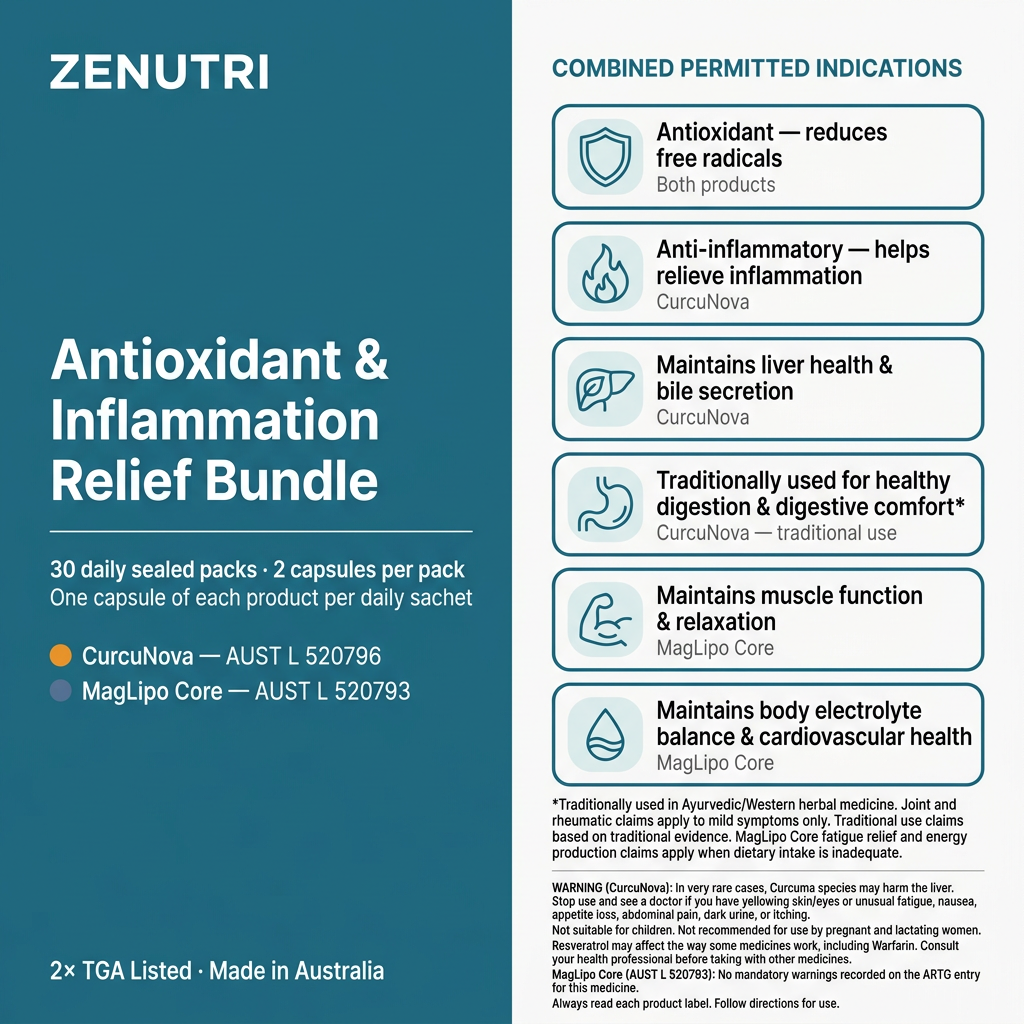
This formulation provides true comprehensive inflammation and metabolic support through complementary mechanisms: curcumin suppresses NF-κB inflammatory transcription, resveratrol activates SIRT1 and Nrf2 pathways, alpha-lipoic acid provides universal antioxidant protection, magnesium supports cellular energy and neuromuscular function, and B-vitamins optimize metabolic efficiency. BioPerine ensures therapeutic bioavailability of key polyphenols. This multi-pronged approach addresses inflammation at transcriptional, oxidative, energetic, and metabolic levels—providing comprehensive support validated by 30+ peer-reviewed studies demonstrating significant reductions in inflammatory markers, oxidative stress, and metabolic dysfunction.
Combines evidence from all cited studies demonstrating synergistic multi-pathway benefits